Three days in Berlin and five questions I took home
SAP TechEd 2026 is over. I came home with 112 slide decks (I asked Claude to scrape them for me ;-)), a head full of questions and the – somewhat overwhelming – feeling that my job description changed over the past three days. I’m still processing everything I’ve seen and heard and in the coming weeks I will work through those questions, one blog at a time.
Ronald already covered the big picture: SAP wants to leave your data where it is, Dremio is the vehicle, and meaning becomes the product. I highly recommend that you read it. It’s the perfect recap of TechEd. With this series I want to dive a bit deeper. What does it all mean and how might it affect us as SAP BI developers?
I attended a lot of sessions at TechEd, did some hands-on workshops, read the exercises of relevant ones I couldn’t attend (SAP published all 76 on GitHub, and Claude helped me go through them) and spoke with a lot of people. However, I couldn’t attend everything. If you think I missed something or disagree with me, feel free to drop me a comment. I’d love to hear your thoughts!
Question one: which data product am I supposed to build?
SAP used three words all week: primary, derived and custom. Session DA100 says a derived data product is “what the agent creates”. The BI developer isn’t named anywhere. That got me wondering. Does that mean I cannot build one myself anymore? I build a fair share of my own work using AI these days, so I am not against the idea. But I do miss writing SQL. I want to know where the SQL went, and I want to understand it. Blog two investigates how these developments take shape in the (near) future.
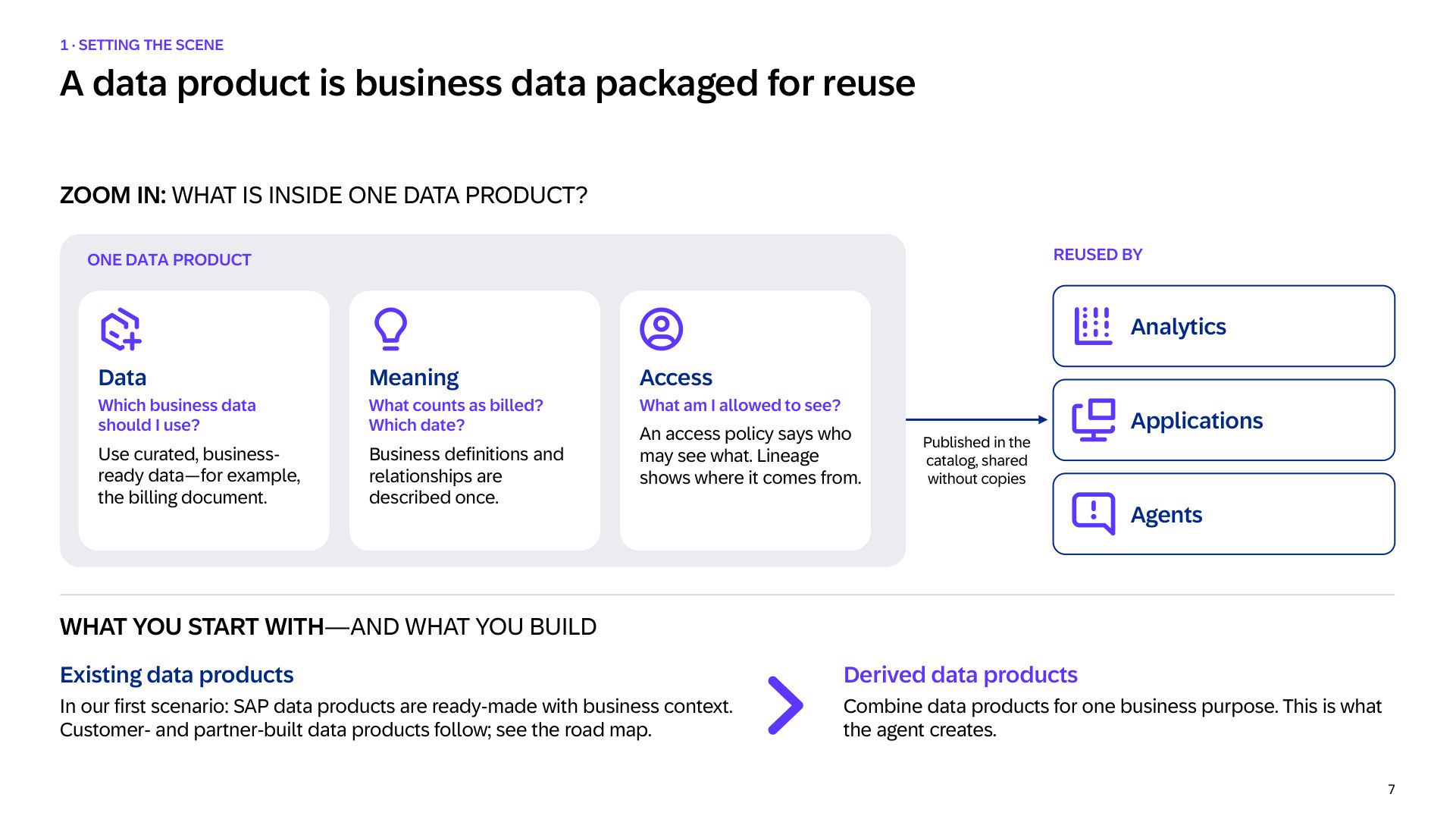
The sentence that started this series: a derived data product is “what the agent creates”. Slide: SAP, session DA100.
Question two: where does my BW model end up living?
There were some sessions about BW migration. Slide 7 of DA200 looks like a migration strategy for BW. Look again and you’ll have some questions. BW, an inbound space in the object store, a customer space, something called “Local table (file)”, and zero-copy sharing at the bottom. Three copies? Four? Was it not supposed to be zero-copy? Do we still move data to HANA? Blog three tries to understand how SAP envisions it and compares that with how we currently migrate our customers’ BW systems to Datasphere.
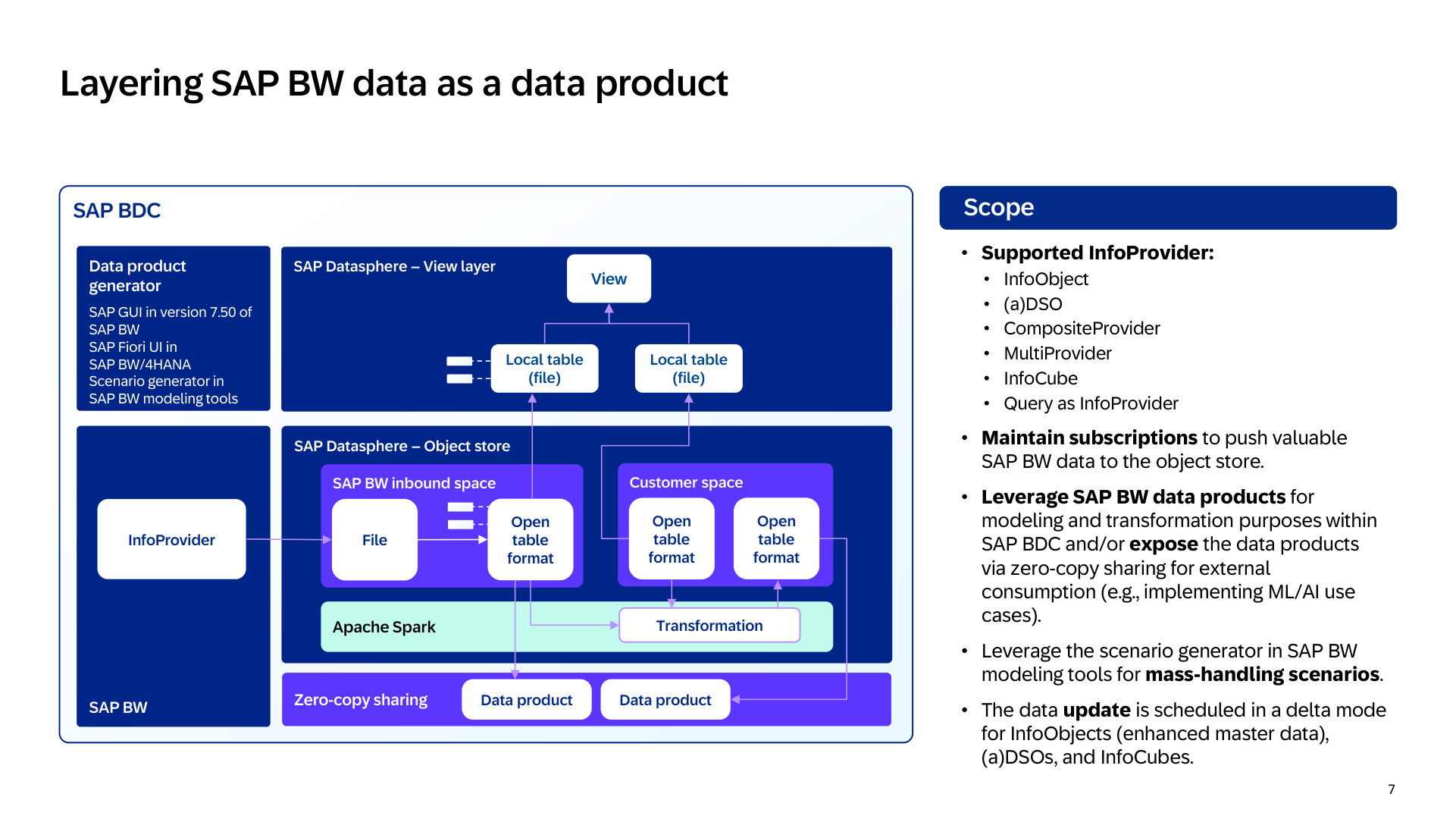
The slide that makes me wonder about BW migration strategies: BW, the object store, a customer space and zero-copy sharing at the bottom. Slide: SAP, session DA200.
Question three: what happens to more complex BW models?
Slide 8 of the same session shows one query on one InfoProvider with two InfoObjects. This is – of course – the happy flow. The systems you and I work in are much more complex and diverse than that. Four layers of InfoProviders beneath a CompositeProvider with self-loops and some ‘beautifully’ written routines all over the place. SAP’s two generators move data and query definitions. The logic in between is another matter, and so is the CompositeProvider that SAP later quietly draws as one table. Blog four is about that stack, where the transformation logic can land today, the one tool that would write it for you, which has no public release date yet, and what we measured on a real BW system we’re migrating now.
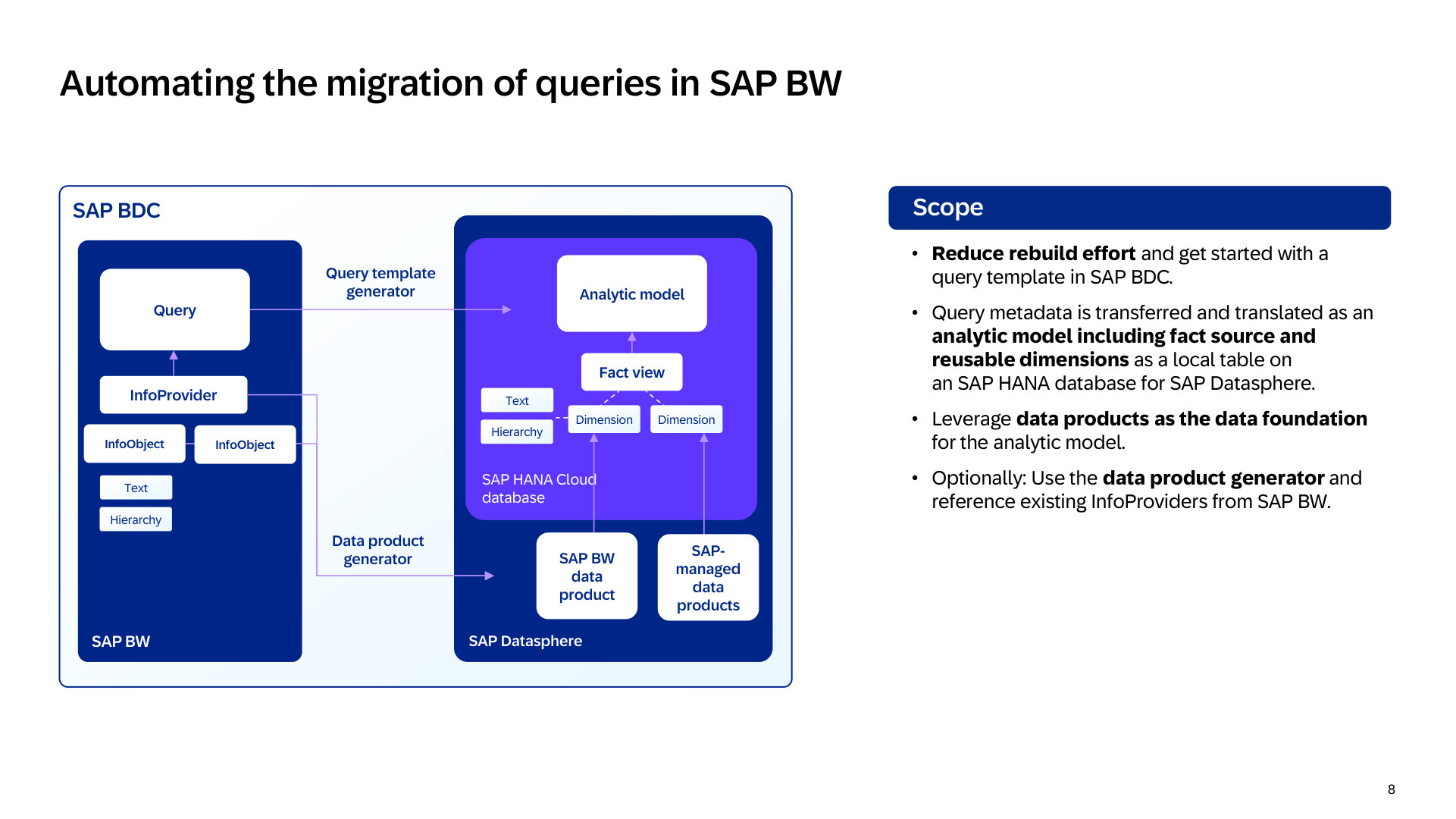
The happy flow: one query, one InfoProvider, two InfoObjects, one analytic model. Slide: SAP, session DA200.
Question four: can an agent handle questions on data?
Every data session ended with the same promise: SAP gives the agent the right context. The Knowledge Graph, the ontology, the data product. Two things kept bothering me. A question on data has one right answer, and language models are known for not giving the same answer twice. In JW209 SAP admitted as much and showed how skills and evals are supposed to deal with it. But a new model version can change the answer again. And all of that context describes your company at one point in time. What happens when the company or its environment changes? The answer I heard from some people was: keep training the models. I think that is the wrong answer, and I think SAP’s own sessions agree with me. Blog five asks what happens when an agent starts predicting or analyzing on the basis of data that only describes your own past and, with all of that said, what the point of agentic analytics is. It closes with the keynote’s promise, an agent that finds a problem in your supply chain and fixes it, and how far away that is. It might be controversial. It’s the one I’m most unsure about.
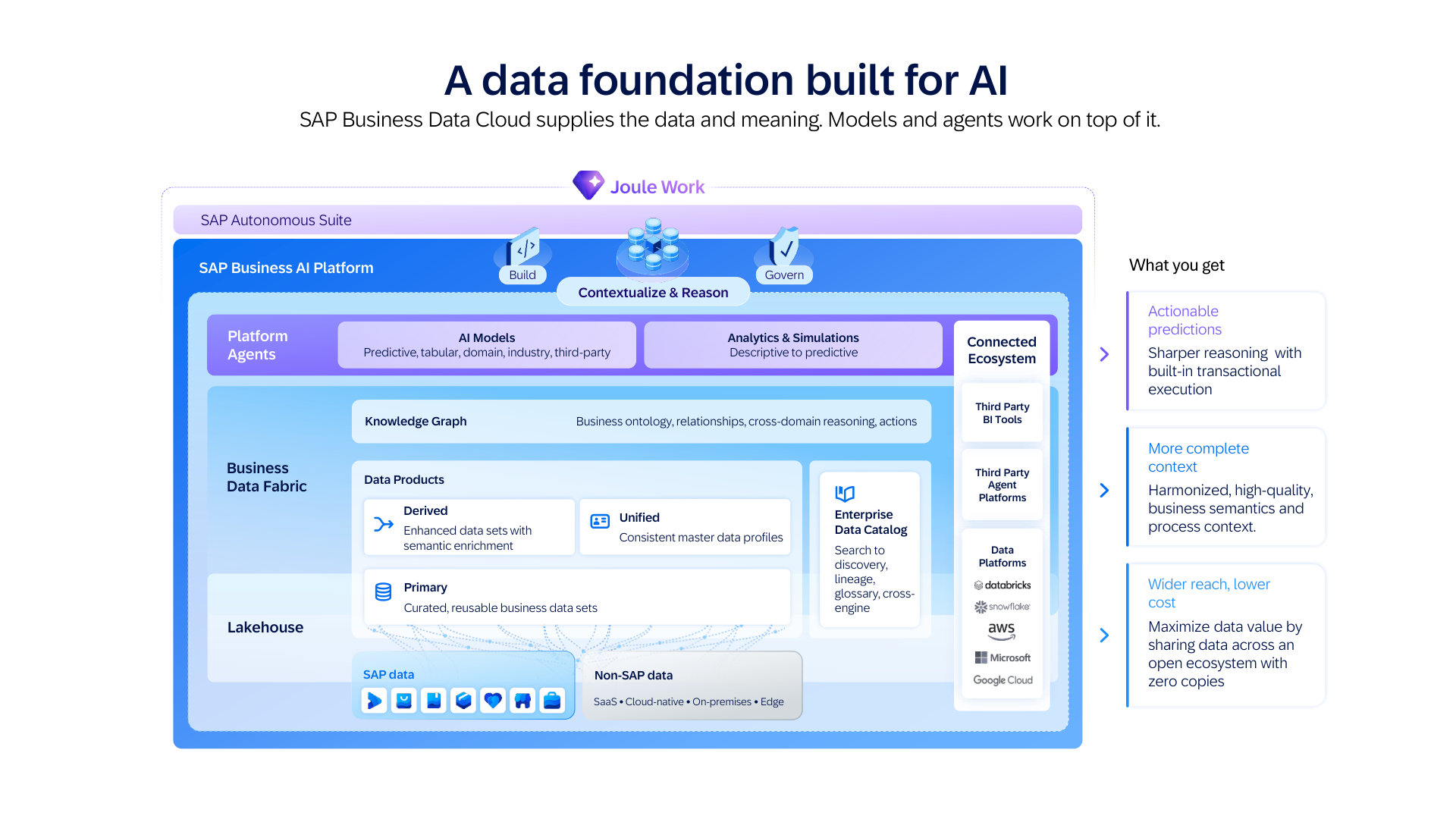
The promise in one picture: Knowledge Graph, ontology and data products supply the context, and models and agents work on top of it. Slide: SAP, session DA802.
Question five: what is left for us to do?
If SAP delivers all the data products, data stays where it is and the business asks AI for the answers, half of what a BW consultant did for twenty years disappears. Extractors, process chains, the Monday morning failed load, discussions with the business to refine requirements. SAP drew a graph in DA806 where “data preparation” shrinks and “strategic decisions” grows. I have an opinion about that graph. The last blog is my answer to the question a lot of people had after the first day of TechEd: Where is Datasphere? And – more importantly – where are we?
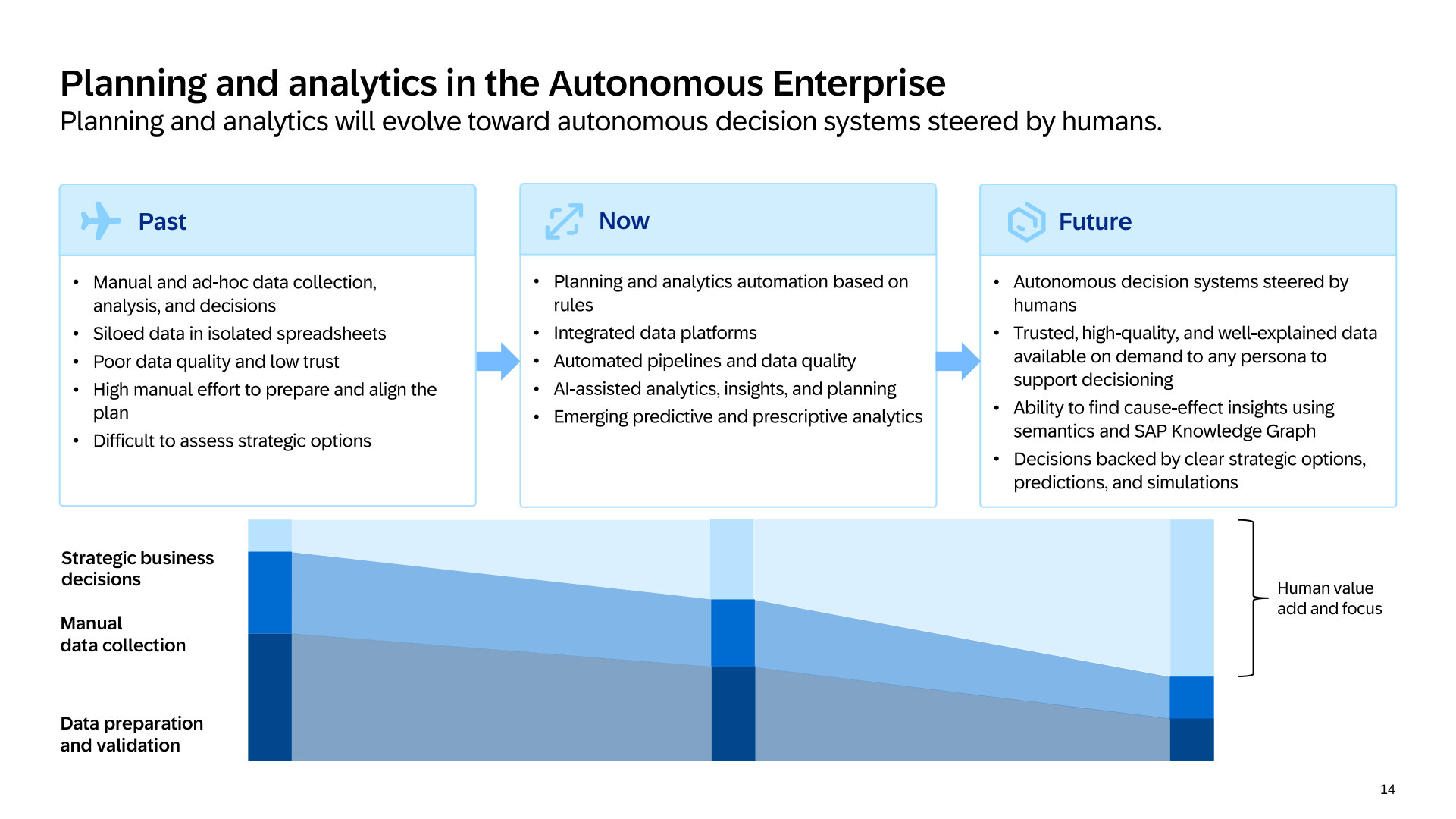
The graph I have questions about: data preparation shrinks, strategic decisions grow. Slide: SAP, session DA806.
What comes next
I will publish the blogs as I finish them, in this order. The slides I quote are SAP’s, with session code and slide number, and the exercise guides are public on GitHub, so you can check both. The opinions are mine.
Got a TechEd question of your own? Send it to me. If it fits the series and I can say something useful about it, it goes in.
Questions about SAP Business Data Cloud, Datasphere or your BW road map? You can always contact us. We would like to hear from you.
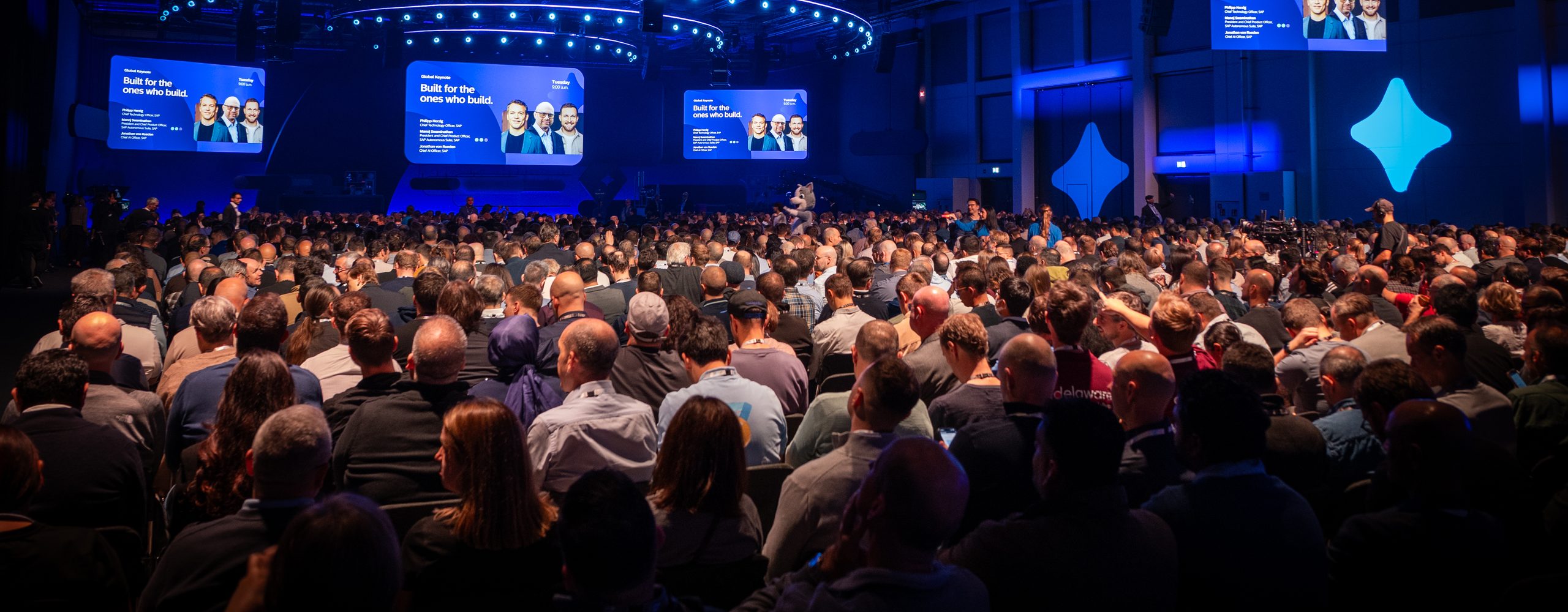
Header photo: SAP SE, from the SAP News Center.
